Emotional Healing in Three Easy Steps: A Powerful Guide
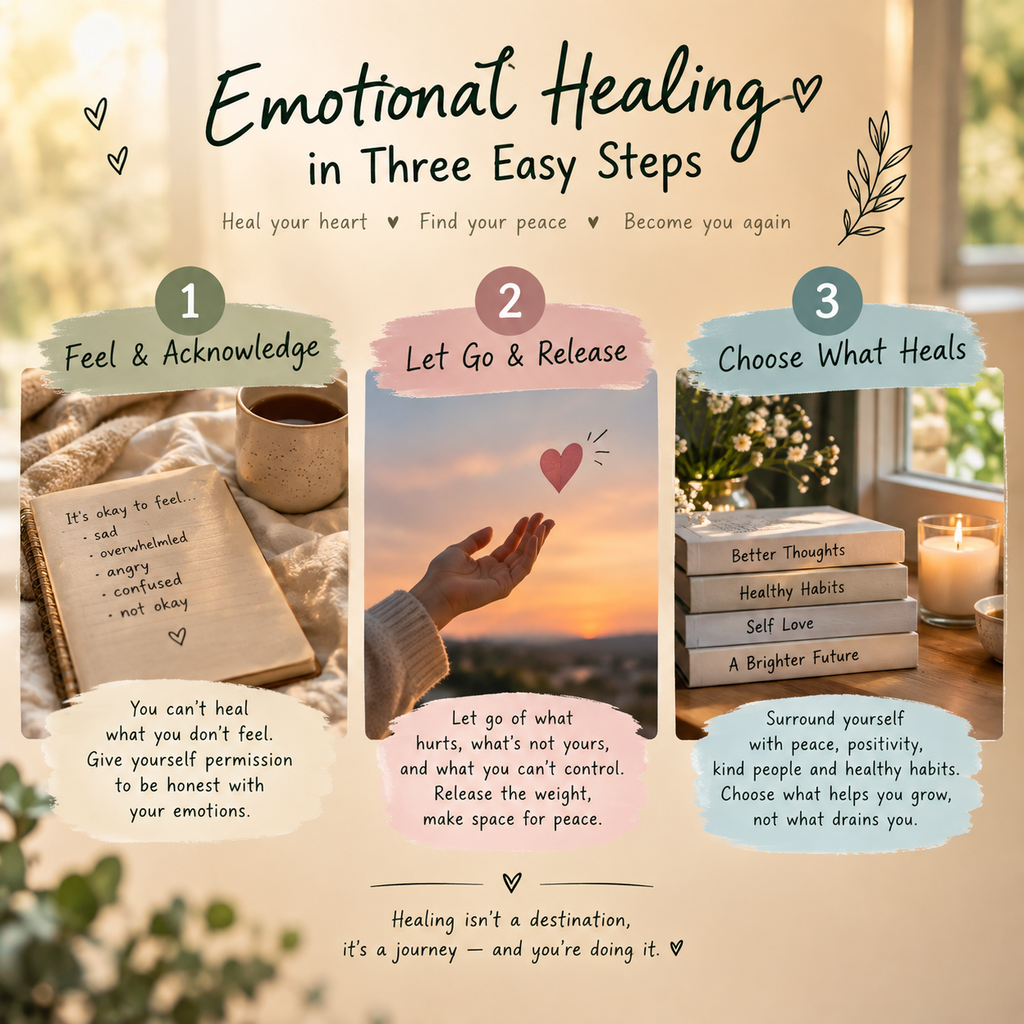
Emotional healing in three easy steps can begin with a simple decision: stop running from painful feelings and start meeting them with honesty, patience, and support. Emotional pain may come from grief, rejection, betrayal, disappointment, conflict, trauma, or feeling unheard. Healing does not mean pretending the past never happened. It means understanding what happened, processing what you feel, and building healthier ways to respond.
This guide uses three practical ideas: notice the wound, process the emotion safely, and choose a healthier next step. They are not a promise of instant recovery or a replacement for professional care. The American Psychological Association recommends support, self-care, and patience when coping with traumatic stress.
Emotional Healing in Three Easy Steps: The Core Process
Emotional healing in three easy steps is best understood as a flexible framework, not a rigid formula. Everyone responds to loss, stress, and painful memories differently.
Step 1: Notice and Name What Hurts
The first part of emotional healing in three easy steps is becoming honest about the feeling that needs attention.
This first step keeps emotional healing in three easy steps grounded in awareness rather than avoidance.
Ask yourself:
- What am I feeling right now?
- What situation triggered this feeling?
- What do I need that I am not receiving?
- Is this pain connected to something recent, or does it remind me of an older wound?
Instead of saying, “I feel terrible,” try naming the emotion: sadness, anger, fear, loneliness, shame, disappointment, or grief. Naming a feeling can make an overwhelming experience more specific.
You do not need to judge the emotion. Feelings are information, not instructions. Anger may point to a boundary that feels threatened. Sadness may point to loss. Fear may signal that something feels unsafe.
If writing feels easier than speaking, try a five-minute journal entry. Write what happened, what you felt, what you needed, and what you wish you could say.
Step 2: Process the Emotion Safely
The second part of emotional healing in three easy steps is giving difficult feelings a safe place to be processed.
In emotional healing in three easy steps, safety matters more than speed.
Processing does not require reliving every painful detail. Move slowly. Take a quiet walk, pray if faith is meaningful to you, talk with a trusted person, journal, breathe slowly, or sit quietly and notice what is happening inside you.
The APA describes emotion-focused coping as strategies that help people regulate emotional reactions, including relaxation, reframing, prayer, and seeking social support. APA resources on trauma and healing
If a memory feels overwhelming, pause. You do not have to push yourself through it alone. A qualified mental-health professional can provide structured support, especially when distress is persistent or connected to trauma.
For Christians, prayer can become part of this process. A simple prayer might be: “God, help me understand this pain, give me wisdom for what to do next, and lead me toward peace and healthy support.”
Faith can provide meaning and comfort, but it should not be used to shame someone for needing professional care.
Step 3: Choose a Healthier Way Forward
The final part of emotional healing in three easy steps is turning insight into a small, realistic action.
The final step makes emotional healing in three easy steps practical in everyday life.
Ask:
- What boundary do I need?
- What conversation needs to happen?
- What habit would support my well-being?
- Who can I safely ask for help?
- What can I control today?
Sometimes healing looks like forgiving someone. Sometimes it looks like creating distance. It may mean apologizing, changing a pattern, leaving an unhealthy situation, or learning to trust carefully again.
Forgiveness does not require excusing harmful behavior or returning to an unsafe relationship. You can care about someone while maintaining a firm boundary.
The aim is not to become untouched by life. It is to become better equipped to experience emotions without allowing every painful feeling to control your choices.
Why Emotional Healing Takes Time
Emotional healing in three easy steps is not a three-day challenge or a guarantee that every painful memory will disappear. Grief, trauma, relationship loss, family conflict, and major life changes can affect people differently.
For many readers, emotional healing in three easy steps is a starting framework rather than a complete answer.
Progress may be quiet. You might react less intensely, communicate more clearly, sleep more consistently, or recover faster after a difficult day. Those changes matter.
Psychotherapy can help people develop healthier ways of thinking, behaving, and coping with problems. If distress interferes with work, relationships, sleep, daily activities, or your ability to function, consider speaking with a qualified professional.
When to Use Emotional Healing in Three Easy Steps
This framework can be useful after a breakup, friendship conflict, family disagreement, bereavement, betrayal, rejection, disappointment, or a stressful life transition.
You might also return to emotional healing in three easy steps when an old memory unexpectedly brings up a strong reaction. Start with noticing rather than immediately solving. Then process the emotion safely. Finally, decide what action fits your present circumstances.
Remember that healing is personal. What helps one person may not help another.
FAQs About Emotional Healing
What is emotional healing?
Emotional healing is the process of understanding painful experiences, processing difficult emotions, and developing healthier ways to cope and move forward. It does not necessarily mean forgetting the past.
What are the three steps to emotional healing?
A practical framework is to notice and name what hurts, process the emotion safely, and choose a healthier way forward. These steps can be repeated as circumstances change.
Does emotional healing mean forgiving everyone?
No. Forgiveness is a personal choice, and healing does not require returning to an unsafe relationship or excusing harmful behavior. Boundaries can be part of recovery.
Can prayer support emotional healing?
For people with religious faith, prayer may provide comfort, reflection, hope, and a sense of connection with God. It can be used alongside other forms of emotional and professional support.
When should I talk to a therapist?
Consider professional support when distress is persistent, overwhelming, worsening, or interfering with relationships, work, sleep, or everyday activities. A trained professional can help you understand patterns and develop coping strategies.
How can I start emotional healing today?
Start small. Name what you feel, identify what triggered it, choose one safe coping action, and reach out to someone trustworthy if you need support.
Final Thoughts
Emotional healing in three easy steps offers a simple place to begin: notice the wound, process the emotion safely, and choose a healthier next step. You do not have to rush yourself, deny what happened, or carry every burden alone.
Healing can include faith, reflection, supportive relationships, healthy boundaries, practical coping skills, and professional care when appropriate. The most important step may be the one you can take today: tell yourself the truth about what you feel, treat yourself with compassion, and choose one safe action that supports your well-being.
If you found this helpful and are looking for more interesting insights, be sure to .explore :