Emotional and Physical Healing: Powerful Steps to Recover
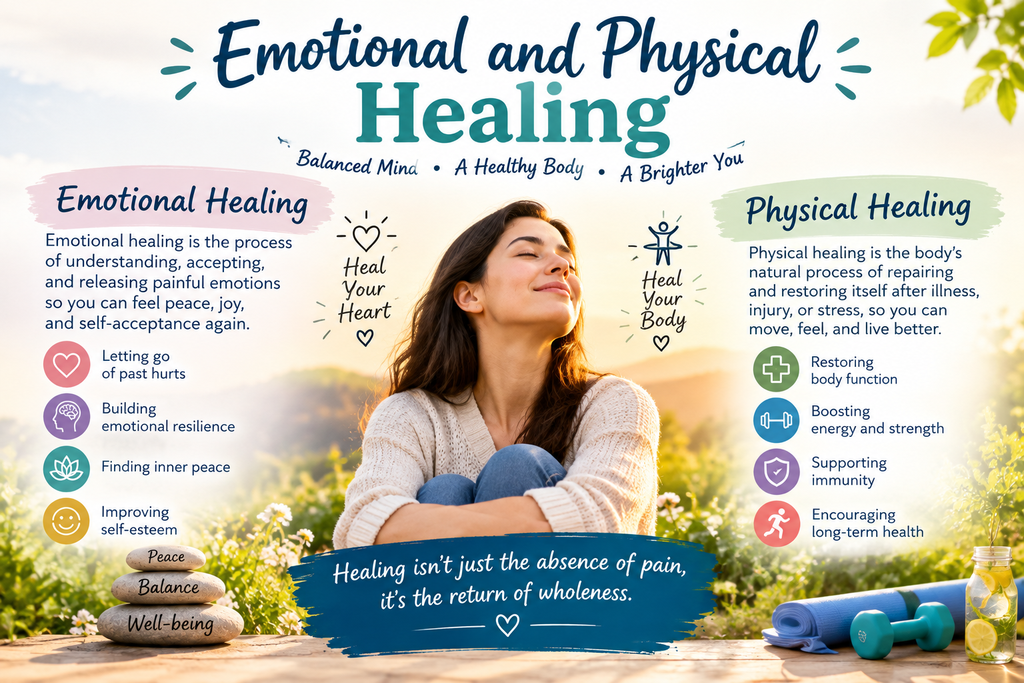
Healing is a journey that involves more than just recovering from an injury or illness. Emotional and physical healing means restoring balance between your mind, body, and inner wellbeing. While physical healing focuses on repairing the body, emotional healing helps you process pain, rebuild confidence, and regain peace after difficult experiences.
Many people experience emotional struggles after loss, trauma, illness, stress, or major life changes. At the same time, physical conditions can affect emotions, creating a strong connection between mental and bodily health. Understanding this connection can help you take better steps toward complete recovery.
What Is Emotional and Physical Healing?
Emotional and physical healing is the process of recovering from both inner emotional wounds and physical challenges. It involves caring for your body while also addressing feelings such as sadness, fear, stress, grief, or emotional exhaustion.
Physical healing may include medical treatment, rest, exercise, nutrition, and rehabilitation. Emotional healing often involves acceptance, self-care, healthy relationships, reflection, and sometimes professional support.
True healing is not always about returning to the person you were before. Sometimes it is about becoming stronger, wiser, and more aware of yourself after facing challenges.
Understanding Emotional Healing
Emotional healing focuses on repairing invisible wounds that affect your thoughts, feelings, and daily life. Emotional pain can come from many experiences, including:
- Loss of a loved one
- Relationship difficulties
- Childhood experiences
- Trauma
- Anxiety and stress
- Major life changes
- Feelings of rejection or disappointment
Unlike a physical injury, emotional wounds are not always visible. However, they can influence sleep, energy levels, confidence, and overall quality of life.
The process of emotional recovery usually begins with acknowledging your feelings instead of ignoring them. Accepting your emotions allows you to understand your experiences and gradually move forward.
Understanding Physical Healing
Physical healing is the body’s natural process of repairing damage caused by illness, injury, or stress. The body uses complex systems to recover, including immune responses, tissue repair, and regeneration.
Physical healing may involve:
- Medical care
- Medication when needed
- Physical therapy
- Healthy nutrition
- Proper sleep
- Gentle movement and exercise
- Stress management
Every person heals differently. Recovery time depends on the type of condition, lifestyle, support system, and overall health.
How Emotional and Physical Healing Are Connected
The mind and body are closely connected. Emotional stress can influence physical health, while physical illness can affect emotional wellbeing.
For example, someone recovering from surgery may experience fear, frustration, or sadness during recovery. Similarly, ongoing stress may contribute to tiredness, muscle tension, sleep problems, and reduced energy.
Research on mind-body approaches shows that emotional wellbeing and physical health can influence each other. Supporting both areas creates a more complete recovery process. You can learn more about the relationship between mental and physical wellness through trusted resources about mind and body approaches for stress and well-being.
Signs You May Need Emotional Healing
Recognizing emotional struggles is an important step toward recovery. Common signs include:
- Feeling emotionally exhausted
- Difficulty trusting others
- Constant worry or fear
- Avoiding certain memories or situations
- Feeling disconnected from yourself
- Losing interest in activities you once enjoyed
- Struggling with forgiveness or acceptance
These signs do not mean someone is weak. They are signals that your mind may need care and attention.
Steps That Support Emotional and Physical Healing
1. Accept Your Feelings
Healing begins when you allow yourself to recognize emotions without judgment. Feeling sadness, anger, or fear is a natural human response.
Suppressing emotions often makes recovery harder. Acknowledging your feelings creates space for growth and understanding.
2. Practice Self-Care
Self-care supports both emotional and physical recovery. Small daily habits can create meaningful improvements.
Helpful practices include:
- Getting enough sleep
- Eating nourishing foods
- Spending time outdoors
- Practicing relaxation techniques
- Maintaining supportive relationships
3. Build a Support System
Healing becomes easier when you do not face challenges alone. Friends, family members, counselors, or support groups can provide encouragement and understanding.
Sharing your experience with trusted people can reduce emotional pressure and create a sense of connection.
4. Take Care of Your Body
Your physical condition affects your emotional state. Regular movement, balanced nutrition, hydration, and proper rest help your body regain strength.
Even small healthy choices can contribute to long-term recovery.
5. Be Patient With Your Journey
Recovery does not happen overnight. Emotional and physical healing requires patience because every person has a different timeline.
Progress may happen slowly, but small improvements are still meaningful steps forward.
Inspirational Thoughts About Healing
Healing is not about forgetting what happened. It is about learning how to live with greater strength and peace.
Here are some reminders for difficult moments:
- Every small step forward is still progress.
- Your past experiences do not define your future.
- Healing takes courage, patience, and compassion.
- Your body and mind deserve kindness.
- Difficult seasons can create personal growth.
- Recovery is a journey, not a race.
- Strength often grows through challenges.
- Hope can return even after painful experiences.
- Taking care of yourself is an act of love.
- A healed heart can create a brighter future.
Why Emotional and Physical Healing Matters
Many people focus only on treating physical symptoms while ignoring emotional struggles. However, complete wellbeing requires attention to both areas.
Emotional healing can improve confidence, relationships, and mental strength. Physical healing can restore movement, energy, and independence.
When both are supported together, people often develop stronger coping skills and a healthier relationship with themselves. nccih.nih.gov/health/mind-and-body-approaches-for-stress-and-well-being
When to Seek Professional Support
Sometimes healing requires guidance from trained professionals.
Consider seeking support when:
- Emotional pain feels overwhelming
- Daily activities become difficult
- Recovery from illness feels emotionally challenging
- Stress affects relationships or work
- Symptoms continue for a long time
Healthcare professionals and mental health specialists can provide personalized support based on individual needs.
Related Healing Topics
If you are exploring personal recovery and wellbeing, you may also find value in topics such as:
- Spiritual healing and inner peace
- Inspirational healing messages
- Prayer for strength during difficult times
- Encouraging words for emotional recovery
- Positive mindset and personal growth
Frequently Asked Questions
What is emotional and physical healing?
Emotional and physical healing is the process of recovering from emotional struggles and physical challenges while restoring balance between the mind and body.
How long does emotional healing take?
The time required for emotional recovery varies for each person. Factors such as personal experiences, support systems, and coping methods can influence the healing process.
Can emotional stress affect physical health?
Yes. Long-term emotional stress can influence sleep, energy levels, muscle tension, and overall physical wellbeing.
What helps physical healing happen faster?
Proper medical care, healthy nutrition, enough rest, movement, and following professional advice can support physical recovery.
How do I begin my emotional healing journey?
Start by recognizing your feelings, practicing self-care, seeking support, and allowing yourself time to recover.
Are emotional and physical healing connected?
Yes. The mind and body influence each other, which is why caring for emotional wellbeing can support physical recovery.
Can positive thinking help with healing?
A positive mindset can encourage healthier coping behaviors and emotional strength, although it works best alongside proper care and support.
Why is self-care important during recovery?
Self-care provides the body and mind with the resources needed to manage stress, rebuild strength, and maintain balance.
Final Thoughts
Emotional and physical healing is a personal journey that requires patience, kindness, and commitment. Healing does not mean that challenges never happened; it means you develop the strength to move forward despite them.
By caring for your emotions, supporting your body, and seeking help when needed, you can create a healthier and more balanced life. Every step toward healing matters, no matter how small it may seem.
If you found this helpful and are looking for more interesting insights, be sure to .explore :