To Live Is Christ and to Die Is Gain: Powerful Meaning
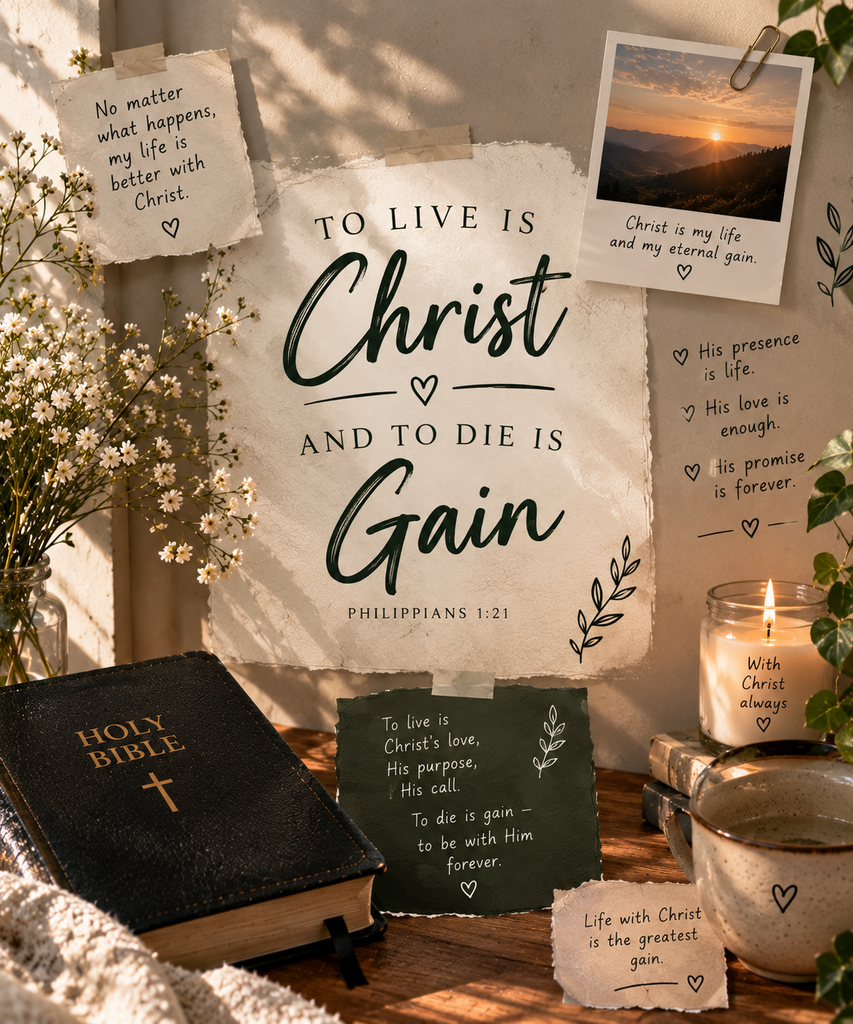
Philippians 1:21 is one of the clearest statements of Christian purpose in the New Testament. Paul writes from imprisonment and explains that his life is centered on Christ, while death is gain because it brings him into the hope of being with Christ. The verse is not a romantic celebration of death. It is a declaration that neither suffering nor death can make Christ less valuable. For Paul, Christ gives earthly life its purpose and eternal life its hope.
To live is Christ and to die is gain means that Jesus is not simply one part of a believer’s life. He becomes the center that shapes identity, choices, relationships, service, suffering, and hope. At the same time, death is called gain because Paul looks beyond the grave to being with Christ. Philippians 1:21 therefore joins two truths: faithful living has a purpose, and Christian hope reaches beyond death.
What Does To Live Is Christ and to Die Is Gain Mean?
In simple terms, to live is Christ and to die is gain means living for Christ, trusting Christ, becoming more like Christ, and making His purposes more important than personal ambition. “To die is gain” describes Paul’s confidence that death cannot ultimately separate the believer from Christ.
Paul explains this tension in the surrounding verses. He is uncertain whether he will continue living or depart, yet he sees value in both possibilities. If he remains alive, his life can continue producing fruitful labor for Christ. If he dies, he expects to be with Christ.
This context keeps the verse balanced. Christian hope does not make earthly life meaningless. Instead, it makes faithful living more purposeful because the believer has an eternal perspective.
The Meaning of “To Live Is Christ”
The phrase to live is Christ describes a whole-life commitment rather than a religious slogan. Paul’s identity, work, suffering, relationships, and future were increasingly shaped by Jesus. His imprisonment did not remove his purpose; it became part of the setting in which he continued to serve the gospel.
1. Christ Becomes the Center of Identity
A Christ-centered life asks, “Who am I becoming?” rather than only, “What am I achieving?” Faith changes the way a person understands worth, success, failure, and service.
2. Christ Shapes Daily Decisions
Living for Jesus affects ordinary choices: how we speak to family, respond to criticism, use money, treat coworkers, forgive others, and handle temptation. Faith becomes visible through everyday conduct.
3. Christ Gives Suffering a Purpose
Paul was imprisoned, yet his circumstances did not cancel his mission. His situation could still serve the spread of the gospel. Christian faith does not promise a life without hardship; it gives suffering a different framework.
4. Christ Redirects Ambition
Instead of making recognition, comfort, possessions, or status the final goal, believers can ask whether their goals honor God and benefit others.
5. Christ Becomes the Source of Hope
A believer may experience uncertainty, grief, or disappointment without pretending those things do not hurt. The hope is that circumstances are not the final measure of God’s faithfulness.
What Does “To Die Is Gain” Mean?
The phrase to die is gain can sound strange without the surrounding Christian teaching about resurrection and being with Christ. Paul is not saying that death itself should be sought. He is describing the hope that death cannot separate those who belong to Christ from Him.
Philippians 1:23 makes Paul’s perspective clearer. He describes departing and being with Christ as “far better,” while still recognizing that remaining alive can serve others.
The “gain” is therefore not simply escape from pain. It is the hope of being with Christ. This is an important distinction because it prevents the verse from being interpreted as a rejection of earthly life.
Christian hope also changes the way believers approach mortality. Death remains painful and is still accompanied by grief, but it does not have the final word. The resurrection of Jesus stands at the heart of Christian hope.
Why To Live Is Christ and to Die Is Gain Matters Today
To live is Christ and to die is gain still speaks directly to modern questions about purpose. Many people measure life by career progress, possessions, popularity, productivity, or approval. Paul offers a different center: Christ.
This perspective can bring clarity when life feels scattered. Instead of asking only what will make us successful, we can ask what will make us faithful. Instead of allowing fear to control every decision, we can remember that our deepest hope is not limited to the present world.
For someone facing suffering, Philippians 1:21 can remind them that hardship does not automatically make life pointless. For someone grieving, it points toward Christian hope beyond death. For someone searching for purpose, it offers a foundation deeper than achievement.
How to Live Out Philippians 1:21
The practical response to to live is Christ and to die is gain is not complicated, but it requires consistency.
- Begin the day with prayer and Scripture.
- Ask how your work can serve God and other people.
- Practice forgiveness instead of feeding resentment.
- Use your words to encourage rather than humiliate.
- Serve someone who cannot repay you.
- Let your faith shape private decisions, not only your public image.
- Treat spiritual growth as a process rather than a performance.
- Keep eternity in view without neglecting today’s responsibilities.
A Christ-centered life is not a life without weakness. It is a life that repeatedly turns back toward Christ when it falls, wanders, or becomes afraid.
A Short Reflection on To Live Is Christ and to Die Is Gain
To live is Christ and to die is gain means my present life has a purpose beyond myself. My work can become service. My relationships can become places to practice love. My trials can become opportunities for endurance. My choices can point toward the One I claim to follow.
To die is gain means my hope does not end with earthly circumstances. Christian hope looks toward being with Christ and the resurrection promised through Him. That hope does not erase grief, but it can keep grief from becoming the final story.
This is why Philippians 1:21 remains powerful: it does not ask believers to choose between meaningful life and eternal hope. It teaches them to hold both together.
Related Bible Themes and Verses
Readers studying this passage may also explore Christian purpose, living for Jesus, eternal life, resurrection hope, suffering and faith, discipleship, spiritual identity, Christian courage, and hope in death.
Philippians 1:21 connects naturally with Galatians 2:20, Romans 14:8, Philippians 1:22–23, Colossians 3:4, and 2 Corinthians 5:8. These passages help develop the wider biblical picture of belonging to Christ in life and death.
For readers who want to compare translations of the verse, Bible Gateway — Philippians 1:21 provides several Bible-version options.
Frequently Asked Questions
What is the main message of Philippians 1:21?
The main message is that Christ gives the believer’s present life its purpose, while death is viewed through the Christian hope of being with Christ.
Did Paul want to die?
Paul acknowledged that departing to be with Christ was deeply desirable, but he also recognized that remaining alive could mean fruitful service for others. His words show surrender to God’s purpose rather than a rejection of life.
What does “to live is Christ” mean practically?
It means allowing Christ to shape your identity, priorities, behavior, relationships, work, and response to suffering.
Why does Paul call death gain?
Paul calls death gain because he understands death through Christian hope. For him, death means entering the presence of Christ rather than facing permanent separation from Him.
Is Philippians 1:21 about heaven?
In the immediate context, Paul connects death with departing to be with Christ. The verse therefore expresses a strong hope of being with Christ beyond earthly life.
How can Philippians 1:21 help during grief?
It can remind grieving believers that Christian hope looks beyond death. It does not remove sorrow, but it offers confidence that death is not the final chapter for those who belong to Christ.
How can I apply this verse to my daily life?
Ask whether your choices reflect Christ, serve others, and strengthen your faith. Begin with small acts of prayer, honesty, forgiveness, generosity, and service.
What is the difference between believing in Christ and living for Christ?
Belief involves trusting Christ; living for Christ means allowing that faith to shape how you think, act, love, work, and respond to life.
Final Reflection
To live is Christ and to die is gain is ultimately a statement of surrendered purpose and confident hope. Paul does not present a life free from hardship. He presents a life so anchored in Christ that neither imprisonment nor the possibility of death can destroy its meaning.
The challenge for Christians today is not merely to understand Philippians 1:21, but to let it reshape ordinary life. Let Christ influence what you pursue, how you treat people, how you endure hardship, and where you place your deepest hope.
When Christ is the center of life, the believer can serve faithfully today and face tomorrow with confidence. Life becomes an opportunity to reflect Him, and death is no longer the final defeat. That is the enduring power of Paul’s words.
If you found this helpful and are looking for more interesting insights, be sure to .explore :