Why Do People Say God Bless When You Sneeze? The Real Story
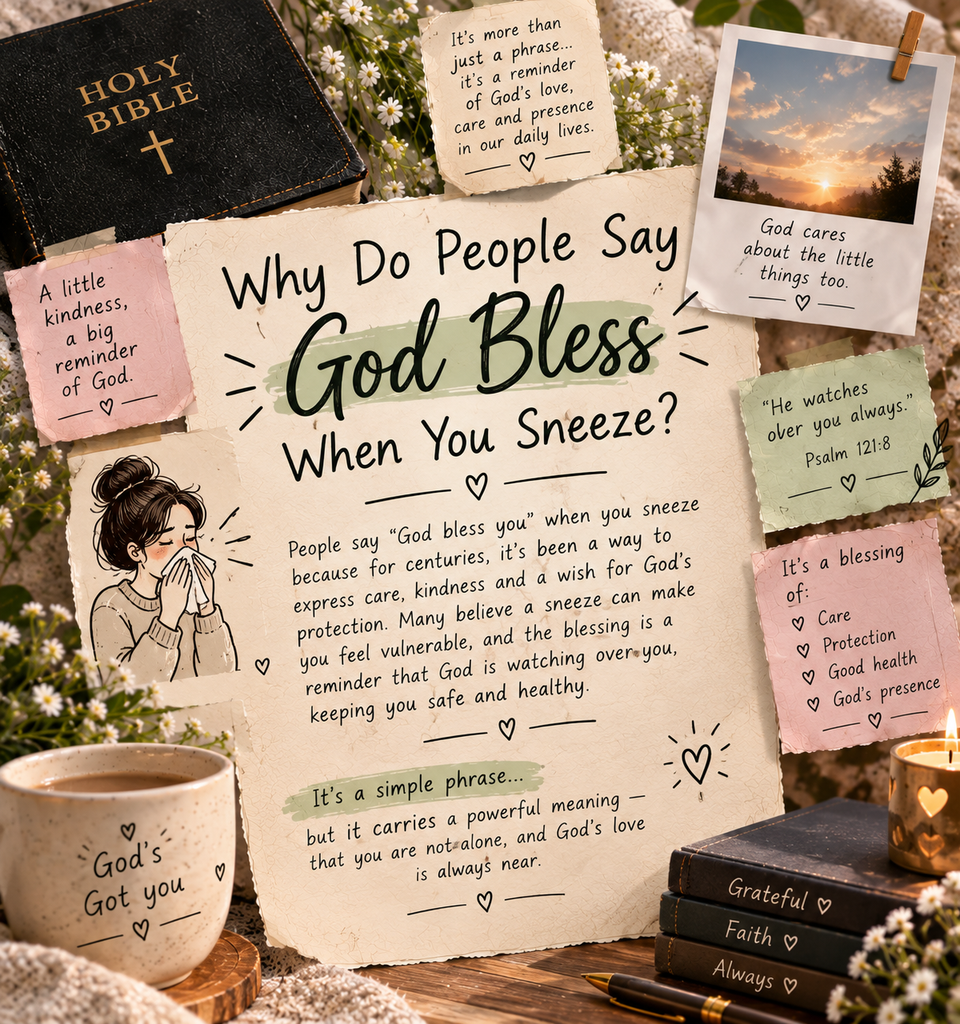
Have you ever wondered why do people say god bless when you sneeze? It is one of those everyday phrases most people hear without stopping to think about it. Someone sneezes, another person quickly says “Bless you,” and the sneezer usually replies, “Thank you.”
The custom is much older than modern sneeze etiquette. Its exact origin is uncertain, but several explanations have been passed down through history, including fears about illness, beliefs about the soul, and the idea that a blessing could offer protection.
Why Do People Say God Bless When You Sneeze?
The short answer is that why do people say god bless when you sneeze has more than one historical explanation.
Today, saying “Bless you” is usually a social courtesy. People may say it automatically because they learned the response from parents, teachers, friends, or their surrounding culture.
Historically, however, sneezing was sometimes associated with danger, illness, spirits, or unusual supernatural meaning. The Library of Congress notes several competing explanations rather than identifying one certain origin.
That uncertainty is important. The popular story about the phrase is often presented as established fact, but historians do not have one definitive explanation for how the custom began.
The Plague Theory Behind “God Bless You”
One of the most widely repeated explanations connects the tradition with plague outbreaks in Europe.
According to the traditional story, sneezing could be an early sign of serious illness. During a plague outbreak in Rome, a blessing was supposedly encouraged as a prayer for protection. This account is often associated with Pope Gregory the Great.
The Library of Congress describes this as one belief about the phrase’s origin, while also presenting other possibilities.
MIT’s International Students Office likewise explains that the expression may have developed during periods when disease made sneezing frightening, but emphasizes that there are multiple possible origins and that no single explanation is certain.
So, if someone asks why do people say god bless when you sneeze, the plague explanation is worth knowing—but it should be described as a historical theory rather than an established fact.
Did People Really Think a Sneeze Could Affect the Soul?
Another explanation comes from ancient and medieval beliefs about the human soul and breath.
Some people once believed that the soul or life force was connected with breath. Because a sneeze suddenly forces air out of the body, it could be interpreted as something spiritually significant.
The Library of Congress records the traditional belief that a sneeze might expel the soul or leave a person vulnerable to evil spirits. In that interpretation, saying “God bless you” served as a protective blessing.
This helps explain why the phrase became associated with protection. It was not necessarily about the sneeze itself being sinful or dangerous. Instead, the blessing reflected the fears and spiritual ideas of earlier societies.
Did Your Heart Stop When You Sneezed?
You may also have heard that people say “God bless you” because your heart supposedly stops when you sneeze.
That is a myth.
The Library of Congress explains that sneezing can temporarily change pressure in the chest and affect blood flow, which can alter the rhythm of a heartbeat. This may create the sensation of a skipped or changed beat, but the heart does not simply stop during every sneeze.
So the idea that why do people say god bless when you sneeze is connected to bringing a stopped heart back to life is not supported as a scientific explanation.
Why Do We Still Say “Bless You” Today?
This is perhaps the most interesting part of the story.
Modern people generally understand sneezing as a normal bodily reflex. Dust, allergens, irritants, or illness can trigger the reflex, causing the body to force air through the nose and mouth.
Yet the phrase survived.
MIT describes “Bless you!” as a common American response to a sneeze and notes that it is now generally used as a polite social response.
In other words, why do people say god bless when you sneeze today is often less about fear and more about habit, courtesy, and cultural tradition.
Someone may say it without thinking about God, plague, spirits, or ancient beliefs at all. They may simply be acknowledging that another person sneezed.
“Bless You” vs. “God Bless You”
There is a small difference in wording.
“God bless you” is explicitly religious because it invokes God. “Bless you” is shorter and can function as a traditional expression of goodwill without the speaker necessarily intending a religious statement.
Both forms are used in English-speaking communities.
MIT notes that “God bless you” is the older form from which the shorter “Bless you” developed.
This is one reason the phrase can feel religious to one person and simply polite to another.
What Does “Gesundheit” Mean?
Not everyone says “Bless you.”
In the United States and Canada, some people use the German word “Gesundheit,” which means “health.” MIT notes that its use in America is connected with German immigration and cultural influence.
Other languages and cultures have their own responses to sneezing. Some focus on health, some on blessing, and some do not have a customary response at all. The Library of Congress provides examples from several cultures.
This shows that the response to a sneeze is cultural rather than a universal human rule.
Is Saying “Bless You” a Religious Practice?
It can be, but it does not have to be.
For a Christian, saying “God bless you” may genuinely express a prayer or wish for God’s protection. For another person, it may simply be a phrase learned during childhood.
The meaning depends on the speaker and context.
That is also why why do people say god bless when you sneeze cannot be answered only through religion. The modern custom sits at the intersection of history, language, culture, superstition, and everyday manners.
What Should You Say After Someone Sneezes?
There is no single required response.
You can say:
- “Bless you.”
- “God bless you.”
- “Gesundheit.”
- “Hope you’re okay.”
- Nothing at all.
In many English-speaking settings, “Bless you” remains the conventional response. The sneezer commonly replies, “Thank you.” MIT specifically identifies “Thank you” as the proper social response in its Americanism guide.
For an authoritative historical and scientific discussion of sneezing and the origins of “God bless you,” you can also explore the Library of Congress explanation.
FAQs About Why People Say God Bless When You Sneeze
Why do people say God bless you after someone sneezes?
People say it because of a long-standing cultural tradition. Proposed origins include fears surrounding illness, beliefs about the soul, and religious ideas about protection. The exact origin remains uncertain.
Did the Black Death cause people to say “Bless you”?
The plague explanation is widely repeated, but it is not the only proposed origin. Historical sources describe the plague connection as one theory rather than a proven single origin.
Did people believe their soul left their body when they sneezed?
Some historical traditions did connect sneezing with the soul, breath, or spiritual vulnerability. These beliefs help explain one proposed origin of the blessing.
Does your heart stop when you sneeze?
No. A sneeze can temporarily affect pressure and blood flow and may change the rhythm or sensation of a heartbeat, but the heart does not simply stop during a sneeze.
What does “Gesundheit” mean?
“Gesundheit” is German for “health.” It is used as a response to sneezing and is an alternative to “Bless you.”
Is “Bless you” always religious?
No. Although the phrase has religious roots and “God bless you” explicitly refers to God, many people use “Bless you” simply as a social courtesy.
Why do Americans say “Bless you”?
It is a common American response to sneezing. MIT describes it as an American cultural expression and notes that “Gesundheit” is another, less common option in the United States.
What should you say when someone sneezes?
“Bless you,” “God bless you,” and “Gesundheit” are all commonly understood responses. You can also simply acknowledge the person or offer help if they appear unwell.
Why don’t people say “Bless you” when someone coughs?
There is no universal rule requiring a response to a cough. “Bless you” became specifically associated with sneezing as a cultural convention, while coughing generally does not have the same established verbal response.
Is saying “God bless you” scientifically necessary?
No. There is no scientific evidence that saying the phrase protects someone from illness or changes what happens physiologically after a sneeze. Its modern role is primarily cultural, social, or religious.
Final Thoughts
The answer to why do people say god bless when you sneeze is more fascinating than the two words might suggest.
The phrase carries layers of history: ancient beliefs about breath and the soul, fears surrounding disease, religious traditions, changing cultural customs, and modern ideas about politeness. Some explanations are well known but difficult to prove, which is why it is better to describe the origin as a collection of historical theories rather than one certain event.
Today, when someone says “Bless you,” they may simply be showing courtesy. They may be expressing genuine faith. Or they may be repeating something they have heard since childhood.
A sneeze lasts only a moment, but the little response that follows carries centuries of human history.
And that is the real reason why do people say god bless when you sneeze remains such an interesting everyday question.
If you found this helpful and are looking for more interesting insights, be sure to .explore :
Prayer Template: Powerful Guide to Writing Meaningful Prayers